

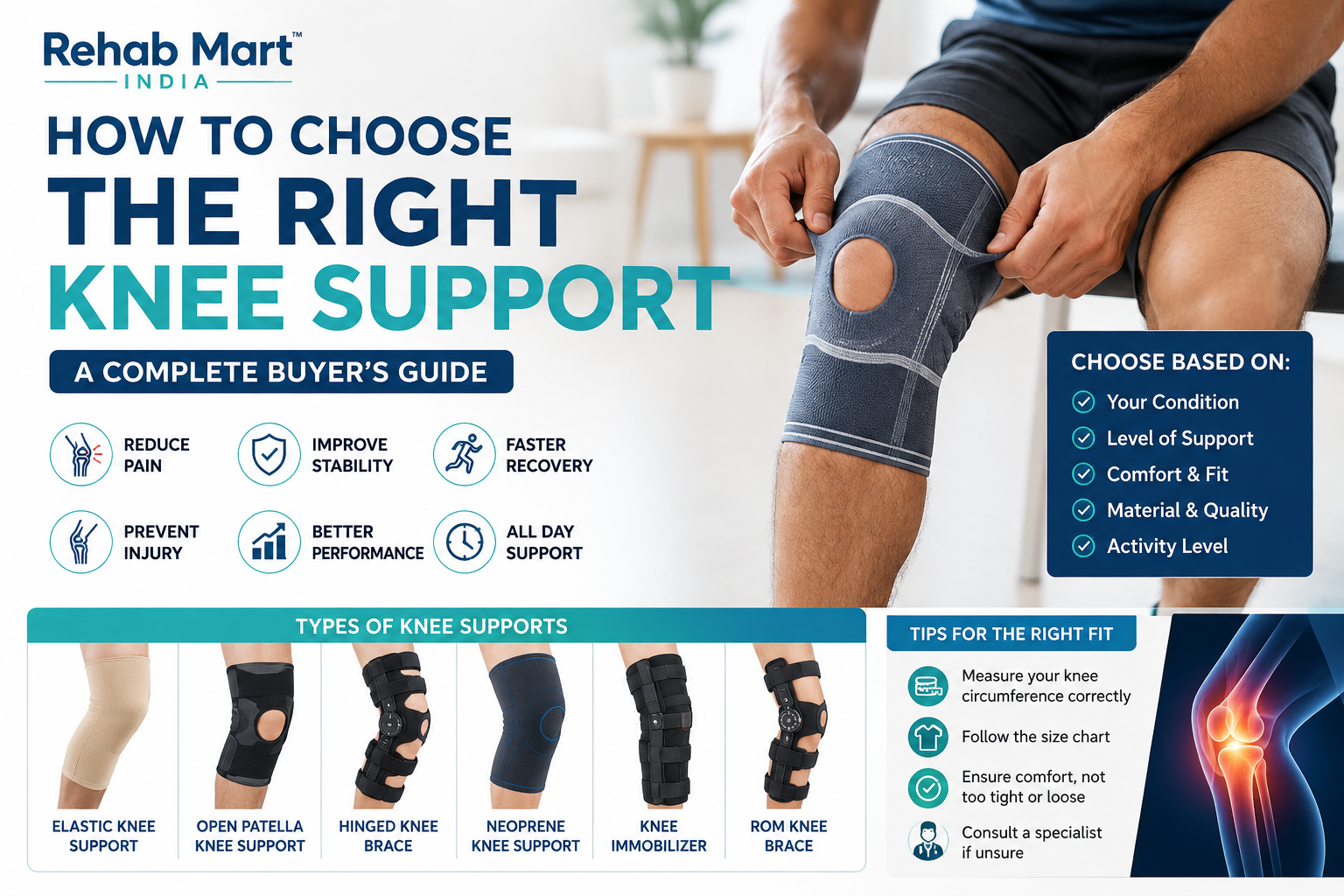
 How to Choose the Right Knee Support: A Complete Buyer's Guide
Knee pain can affect people of all ages, from athletes and fitness enthusiasts to office workers and senior citizens. Whether you're recovering from an injury, managing arthritis, or looking for extra support during daily activities, selecting the right knee support can significantly improve comfort, stability, and mobility.
In this guide, we'll explain the different types of knee supports, their uses, and how to choose the best one for your condition.
Why Do You Need a Knee Support?
A knee support helps stabilize the knee joint, reduce pain, improve movement, and protect the knee from further injury. It provides compression, warmth, and controlled support depending on the type of brace.
Common Reasons to Wear a Knee Support
- Knee pain due to arthritis
- Sports injuries
- Ligament injuries (ACL, PCL, MCL, LCL)
- Meniscus tears
- Patellar instability
- Knee swelling
- Post-operative rehabilitation
- Muscle weakness
- Knee strain from prolonged standing or walking
Types of Knee Supports
1. Elastic Knee Support
Best For:
- Mild knee pain
- Arthritis
- Everyday support
- Walking and light activities
Benefits:
- Comfortable compression
- Improves blood circulation
- Lightweight and breathable
- Easy to wear under clothing
2. Open Patella Knee Support
Best For:
- Patellar tracking problems
- Mild osteoarthritis
- Knee cap pain
- Runner's knee
Benefits:
- Relieves pressure on the kneecap
- Improves patella alignment
- Provides moderate compression
3. Hinged Knee Brace
Best For:
- Ligament injuries
- ACL, MCL, and LCL injuries
- Sports rehabilitation
- Moderate instability
Benefits:
- Side hinges provide excellent stability
- Prevents excessive side-to-side movement
- Ideal for active users
4. Neoprene Knee Support
Best For:
- Arthritis
- Joint stiffness
- Cold weather
- Muscle fatigue
Benefits:
- Retains body heat
- Reduces stiffness
- Comfortable compression
- Durable material
5. Knee Immobilizer
Best For:
- Post-surgery recovery
- Knee fractures
- Severe ligament injuries
- Patellar dislocation
Benefits:
- Keeps the knee straight
- Prevents unnecessary movement
- Supports healing
6. ROM (Range of Motion) Knee Brace
Best For:
- ACL reconstruction
- Knee replacement surgery
- Complex ligament injuries
Benefits:
- Adjustable flexion and extension
- Controlled rehabilitation
- Maximum protection during recovery
How to Choose the Right Knee Support
Step 1: Identify Your Condition
Choose a brace based on your diagnosis or symptoms.
| Condition | Recommended Knee Support |
|---|---|
| Mild knee pain | Elastic Knee Support |
| Arthritis | Elastic or Neoprene Knee Support |
| Runner's Knee | Open Patella Support |
| Ligament Injury | Hinged Knee Brace |
| Knee Surgery | Knee Immobilizer or ROM Brace |
| Sports Protection | Hinged Knee Brace |
Step 2: Select the Right Size
A properly fitted knee support offers better comfort and effectiveness.
Measure the circumference around 6 inches above of your knee using a measuring tape and compare it with the manufacturer's size chart.
Avoid choosing a brace that is too tight or too loose.
Step 3: Choose the Right Material
- Elastic Fabric: Lightweight and breathable
- Neoprene: Warm, supportive, and durable
- Rigid Hinged Braces: Maximum stability
- Immobilizers: Complete restriction of movement
Step 4: Consider Your Activity Level
- Daily walking → Elastic Knee Support
- Office work → Open Patella Support
- Gym workouts → Hinged Knee Brace
- Sports → Hinged Knee Brace
- Recovery after surgery → Immobilizer or ROM Brace
Features to Look For
- Breathable fabric
- Skin-friendly material
- Adjustable straps
- Non-slip design
- Washable construction
- Lightweight design
- Anatomical fit
- Durable stitching
Frequently Asked Questions
Can I wear a knee support all day?
Yes, for mild support you can wear it during daily activities. However, prolonged use should follow your healthcare provider's advice.
Does a knee support cure knee pain?
No. A knee support helps reduce pain, improve stability, and support healing, but it does not cure the underlying condition.
Which knee support is best for arthritis?
Elastic and neoprene knee supports are commonly recommended because they provide gentle compression and warmth.
Which knee brace is best after surgery?
Knee immobilizers and adjustable ROM knee braces are typically recommended after surgery, depending on your surgeon's advice.
Final Thoughts
Choosing the right knee support depends on your condition, activity level, and the amount of stability required. Wearing the correct brace can reduce pain, improve confidence while walking, and support a faster recovery.
If you're unsure which knee support is right for you, consult your doctor, physiotherapist, or orthotist before making a purchase.
At Rehab Mart India, we offer a wide range of high-quality knee supports, including elastic knee supports, open patella braces, hinged knee braces, neoprene supports, knee immobilizers, and ROM knee braces designed for comfort, recovery, and long-term joint protection.